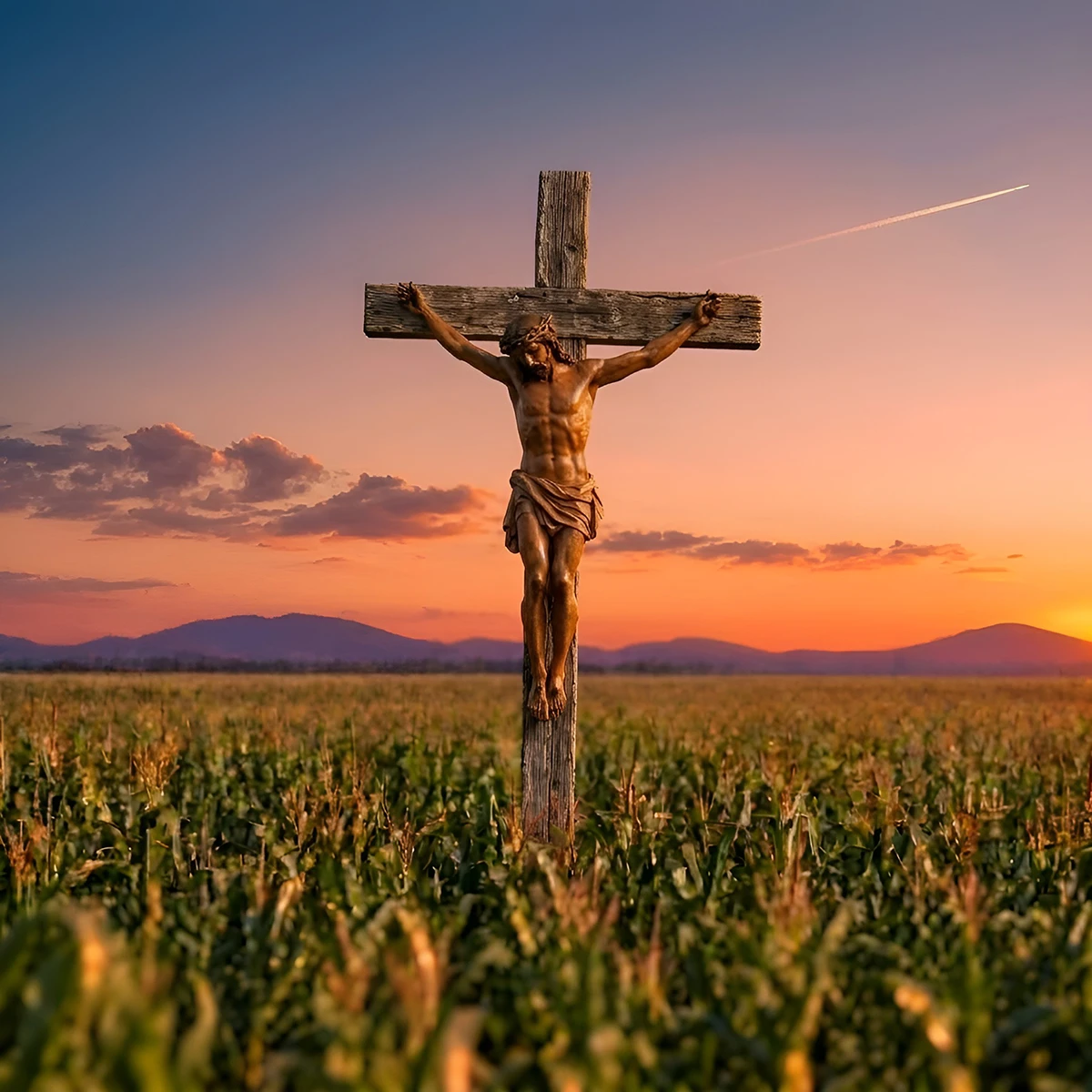
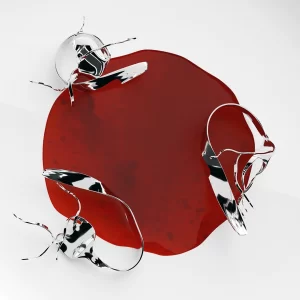
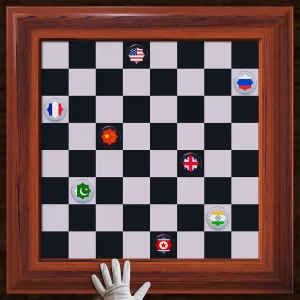
Scarecrow moves the crucifix out of the church and into a cornfield. There it receives no worship; it is given a job instead: guarding the harvest.
The work reads this relocation as a portrait of the present. Religious practice is in retreat, people live fast and measure time in output, and little room is left for the spiritual. Traditions that once structured a life are dropped as obsolete. In this new setting the old rules no longer hold, and the central image of Christian sacrifice is reassigned to a utilitarian role.
The scarecrow was chosen because it is a figure built to frighten: birds away from the crop and, in folklore, children into obedience. Its power depends entirely on being believed. The crucifix once held authority the same way, through awe and fear. Here its audience, modern people, has stopped being afraid. Or interested, for that matter.